The Modern Traveler’s Guide to Gross National Happiness: How Bhutan’s Philosophy Shapes Your Trip
08 December 2025
In modern travel, we often chase checklists: the tallest tower, the busiest market, the most famous photo op. But in the Kingdom of Bhutan, the checklist is replaced by a philosophy.
While the rest of the world obsesses over Gross Domestic Product (GDP), Bhutan focuses on Gross National Happiness (GNH). For the modern traveler, this isn’t just an academic concept—it is the hidden engine that makes a trip to Bhutan feel entirely distinct from any other place on Earth.
At Trip Dragon Bhutan, we believe that understanding this "Happiness Mandate" is the key to unlocking the kingdom's magic.
1. The Unexpected Truth: Happiness is Law
Most countries treat happiness as a lucky byproduct of a good economy. Bhutan flipped the script. In the late 1970s, the Fourth King made a shocking declaration:
"Gross National Happiness is more important than Gross Domestic Product."
This wasn’t just a catchy slogan; it became the constitutional law of the land. Today, every policy—from hydro-power to high-end tourism—is screened by a GNH committee. If a project threatens the people’s well-being or the environment, it is scrapped. When you visit, you aren't just seeing a country; you are walking through a living experiment in human flourishing.
2. The Unconquered Peak: Gangkhar Puensum
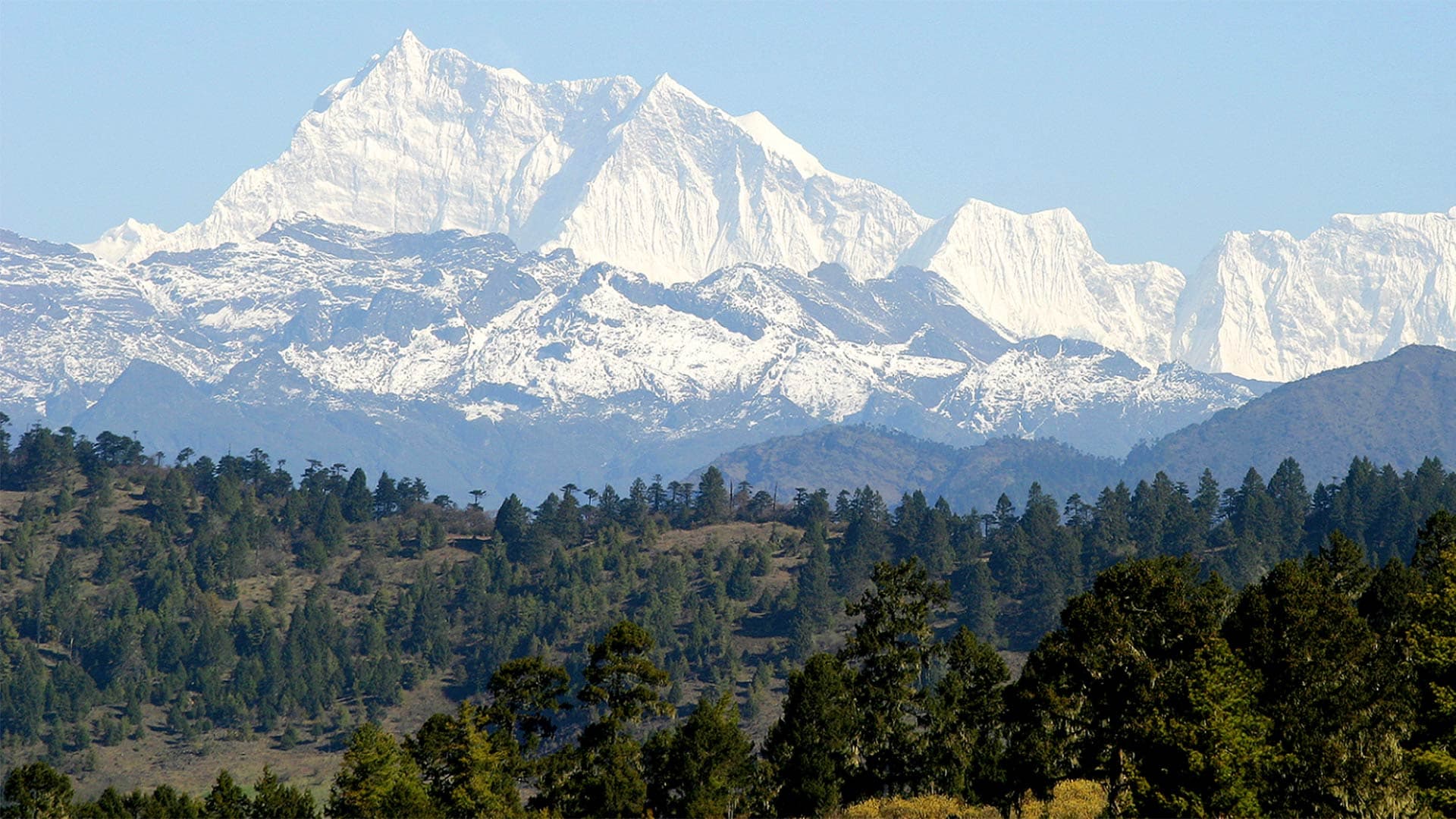
Nowhere is this philosophy more visible than in the silhouette of Gangkhar Puensum. At 7,570 meters, it is the world’s highest unclimbed mountain. In an age where Everest has become a traffic jam of summit selfies, Gangkhar Puensum remains defiantly silent.
Why? Because in 2003, the Bhutanese government banned mountaineering on high peaks entirely. To the outside world, this looked like a missed economic opportunity—a "revenue gap." To Bhutan, it was a GNH priority. The mountains are the abodes of deities; to conquer them is to pollute the source of spiritual water and protection.
By choosing the sanctity of the peak over the revenue of the climb, Bhutan sent a message: Some things are meant to be revered, not conquered. As a traveler, looking at that untouched horizon reminds you that respect is more valuable than achievement.
3. The Four Pillars You Can Feel
Philosophy can be abstract, but GNH is anchored in four concrete pillars that you will experience every day of your trip.
Pillar 1: Environmental Conservation (The Air You Breathe)

Bhutan is the world’s first carbon-negative country. The law requires 60% of the land to remain under forest cover forever (currently around 72%).
The Experience: On a Trip Dragon trek through the Phobjikha Valley, you aren't just looking at trees; you are breathing air so crisp it feels like a physical tonic. You’ll witness rare black-necked cranes roaming free—a direct result of a country that prioritizes the spirit of the land over the revenue of a timber mill.
Pillar 2: Cultural Preservation (Identity in a Global World)
In a globalized world, distinctiveness is disappearing. In Bhutan, it’s thriving.
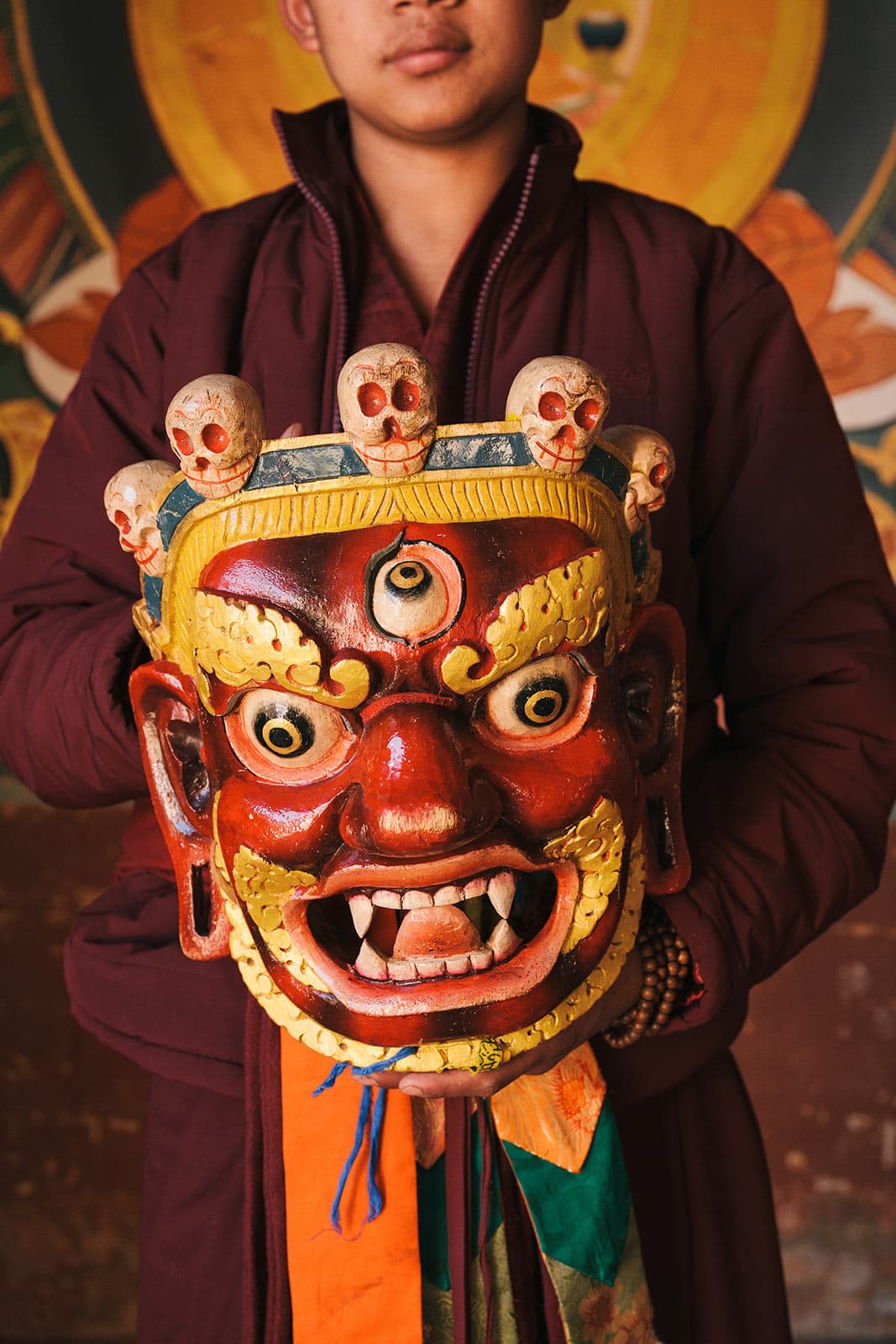
The Experience: You won’t find a McDonald’s or a Starbucks here. Instead, you see citizens wearing the traditional Gho and Kira as daily wear. You’ll visit the Zorig Chusum (The 13 Traditional Arts), where students master ancient crafts like clay sculpting not as "museum pieces," but as essential skills for modern life.
Pillar 3: Sustainable Development (Your SDF at Work)
The $100 Sustainable Development Fee (SDF) often surprises travelers. But here is the concrete truth: your fee directly funds free healthcare and free education for every Bhutanese citizen.
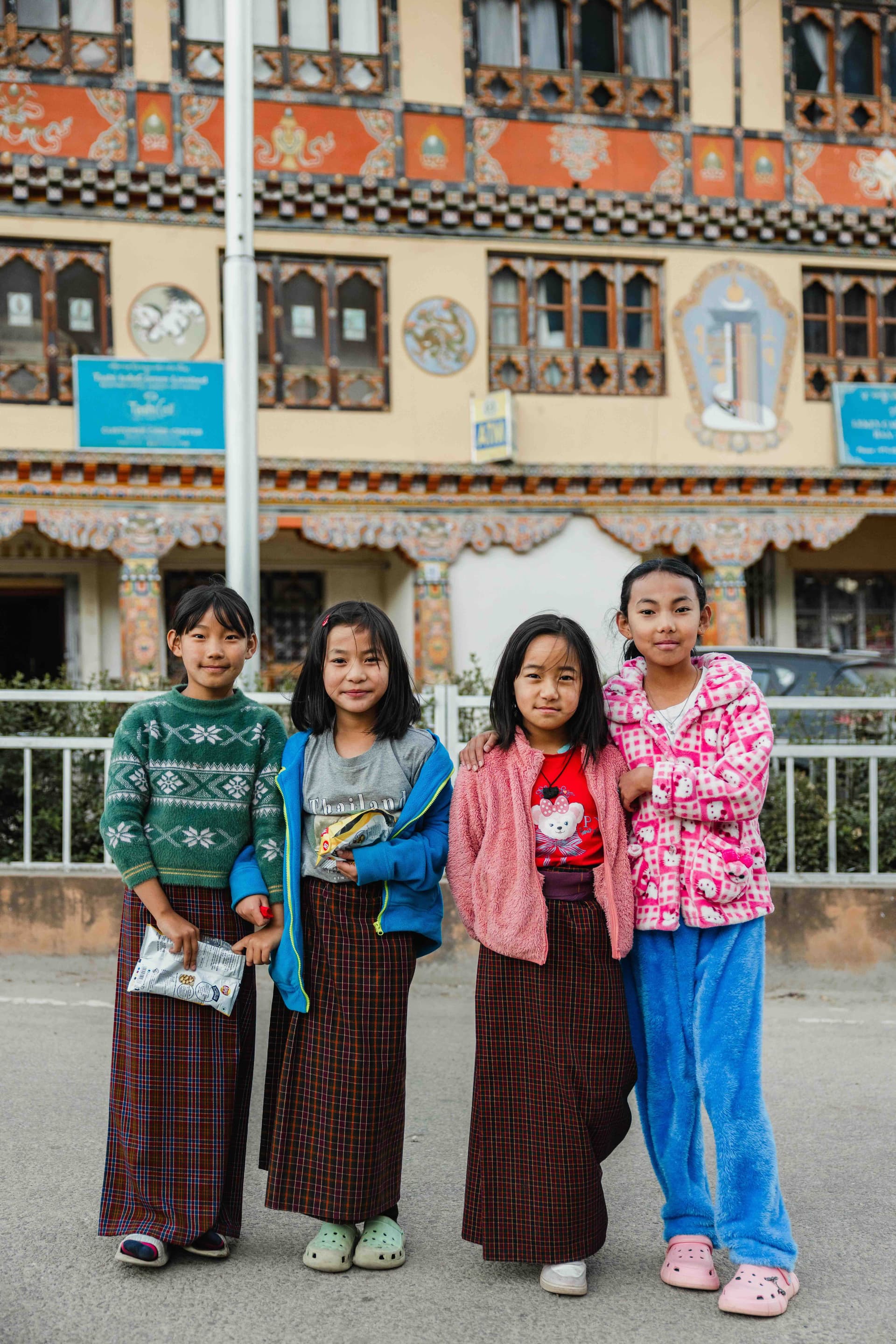
The Experience: When you see local children walking to school with bright smiles, know that your journey helped pay for their books. Your presence supports a model of tourism that enriches the local community rather than exhausting it.
Pillar 4: Good Governance (Social Trust)
Bhutan’s monarchy is deeply loved because the Kings have always put the people first.
The Experience: You’ll hear stories of the Fourth King personally traveling to remote villages to ensure GNH was reaching the furthest corners. This creates a society with low crime and a deep sense of social trust that you will feel the moment you arrive.
4. The Modern Traveler’s Paradox: The Silence of the Bell
We live in the age of the "Modern Traveler’s Paradox." We travel to escape the stress of our GDP-focused lives, yet we bring our stressors with us. We check our emails at 10,000 feet; we document the sunset on Instagram before we actually look at it.
Bhutan isn't "backward" or "stuck in time"—it is "ahead" because it chose to value time over speed. In the national GNH survey, the government measures how much time people spend sleeping and meditating. When you enter a Bhutanese temple, the single, resonant sound of a bell doesn’t compete with a notification on your phone. It cuts through it. By valuing silence and stillness, Bhutan offers the ultimate modern luxury: the permission to be unreachable.
5. A Day in the Life: GNH in a Potato Field
To see how this works on the ground, imagine a morning with Tashi, a potato farmer in the high valleys of Bumthang. Tashi doesn't measure his success by whether he can scale his farm into an industrial conglomerate.
His day is defined by balance. He works the soil with traditional tools that feel heavy and real in his hands. But he stops when the sun is high to sit in a farmhouse scented with woodsmoke and dried chilies. He drinks suja (butter tea) with his neighbors. There is no "hustle culture." There is no rush to beat the person next to him.
Tashi understands that his well-being is tied to the spirit of the mountain and the health of his community. When you sit on his porch, the lack of "hurry" is contagious. You realize that GNH isn't something Tashi thinks about—it’s the air he moves through.
6. The Story of the Tiger’s Nest: Compassion in Motion
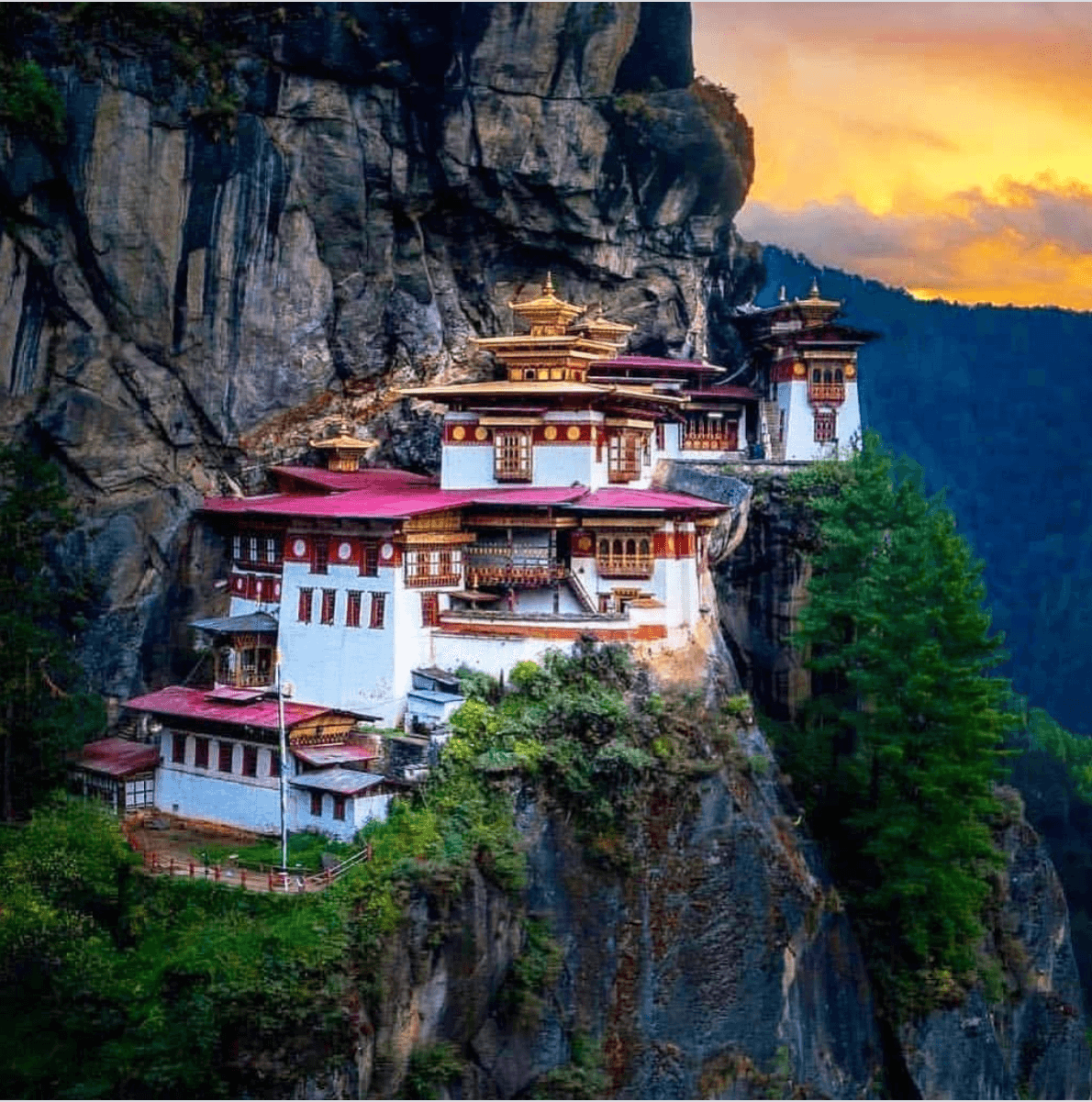
To understand the heart of this philosophy, look at the hike to Paro Taktsang (The Tiger’s Nest). It’s a steep climb to a monastery clinging to a cliff 3,000 feet above the valley floor.
Don't just watch the horizon; watch the grandmother spinning the prayer wheel at the base. She isn’t praying for a promotion or a new car. She is reciting a prayer for the benefit of all sentient beings.
This is the core realization: individual happiness is impossible without the happiness of the collective. When you travel with us, you join that collective. You aren't just an observer; you become part of the stillness.
7. The "Happiness FAQ": Can a Fee Buy Joy?
Skeptics often ask: "Can you really legislate happiness? Is the $100 SDF fee just a high-priced ticket?"
The answer lies in the fourth pillar: Good Governance. The fee is an intentional shield. It prevents the "over-tourism" that has turned Venice into a theme park and Everest into a trash heap. By keeping volume low, Bhutan ensures that the connection between traveler and local remains authentic. You aren't a number in a crowd; you are an invited guest. Your fee is your "membership" into a society that refuses to sell its soul for a quick buck."
8. Finding Your "Internal" GNH
Why does a trip to Bhutan stick with you long after you leave? Because it challenges your definitions of success.
After a few days with Trip Dragon, drinking tea in a farmhouse while the Himalayan rain hits the roof, you realize you haven’t checked your email in 48 hours. That feeling isn't a vacation; it’s the philosophy of happiness working on you. You don't just come to Bhutan to see beautiful things; you come to remember what it feels like to be human.
Plan Your Journey to the Heart of Happiness
Ready to go beyond the checklist? At Trip Dragon Bhutan, we don't just show you the monasteries; we introduce you to the soul of the kingdom.
-
Build Your Dream Itinerary
Join the DIY Trip Planner Waitlist to be the first to custom-build a 2026 route designed for how you travel. -
Prefer Simple & Ready-Made?
Explore our GNH-focused packages — itineraries that balance ancient spirituality with modern comfort. -
Deepen Your Research
Still have questions about visas or flights? Read The Bhutan Travel Guide: Everything You Need to Know Before You Go